
CNC Machining Aluminum Precision Aluminum Parts Supplier
High-precision CNC machining of aluminum alloys — 6061, 7075, 6082, 2024, 5083, and more. Anodizing available. ISO 9001:2015 certified. CMM inspected. Global delivery to USA, Europe, and worldwide.
✓ No minimum order ✓ Prototypes welcome ✓ NDA available
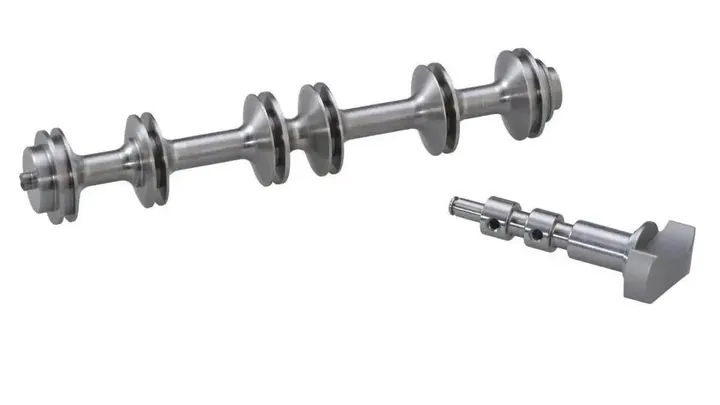
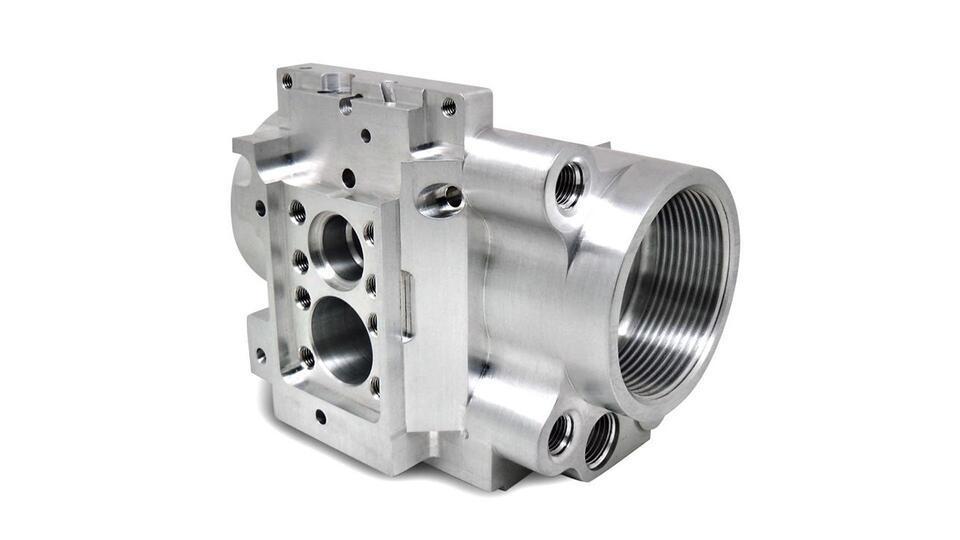
Why Aluminum is the Default Material for CNC Machining
Aluminum is the most widely machined metal in the world — and for good reason. It machines approximately 3–5x faster than stainless steel, which directly reduces cycle time and cost per part. Its strength-to-weight ratio makes it the default choice for aerospace, automotive, and consumer electronics applications where every gram matters. And its corrosion resistance, when enhanced with anodizing, makes it suitable for outdoor, marine, and precision instrument applications where bare steel would fail.
Robocon CNC stocks all standard aluminum alloys in bar, plate, and tube — 6061-T6 for general engineering, 7075-T6 for aerospace and high-stress applications, 6082-T6 for structural European-standard parts, and 2024-T3 for fatigue-critical aerospace applications. Material certificates (EN 10204 3.1 for European customers, ASTM/AMS for US) are maintained on all stock and supplied with every order.
We offer Type II and Type III anodizing in-house for aluminum parts — from natural clear to black, and hard anodize for wear-resistant applications. Anodizing is priced and confirmed at the quote stage, not added as a surprise at invoicing.
Aluminum Grades — Which to Choose
General Engineering
The most popular aluminum for CNC machining. Excellent machinability, good corrosion resistance, weldable, and widely available in all forms. Ideal for structural brackets, enclosures, housings, and general industrial components. Best all-round choice for most applications.
Tensile strength: 310 MPa · Machinability: Excellent
Aerospace & High-Strength
Highest-strength standard aluminum alloy — used in aerospace structural components, motorsport (F1 chassis brackets), and any application where maximum strength-to-weight is required. Not weldable. Machines slightly slower than 6061 but produces excellent surface finish.
Tensile strength: 572 MPa · Machinability: Good
Structural (EU Standard)
The European equivalent of 6061, widely specified in German, Swedish, and UK engineering drawings as EN AW-6082. Good strength, excellent corrosion resistance, and fully weldable. Standard choice for structural engineering in Europe. EN 10204 3.1 material certificates available.
Tensile strength: 310 MPa · EN AW-6082 equivalent
Fatigue-Critical Aerospace
High-strength, fatigue-resistant aluminum used in aircraft skin panels, airframe structures, and aerospace components where cyclic loading is a design consideration. AMS 2770 heat treatment available. Not as corrosion-resistant as 6061 — typically used with cladding or anodizing.
Tensile strength: 483 MPa · AMS/ASTM grades available
Marine & Cryogenic
Non-heat-treatable aluminum alloy with excellent resistance to seawater and industrial chemical environments. Retains ductility at cryogenic temperatures — used in LNG storage, pressure vessels, and marine structural applications.
Tensile strength: 290 MPa · Excellent corrosion resistance
Precision Tooling & Fixtures
Precision cast aluminum tooling plate with minimal residual stress — does not distort after machining. The preferred choice for precision inspection fixtures, semiconductor stage components, and jigs where flatness and dimensional stability are critical. Ra 0.4 surface finish achievable.
Flatness: ±0.1 mm/m · Stability: Excellent
Aluminum Anodizing Services
Anodizing is the most common surface treatment for CNC machined aluminum — improving corrosion resistance, surface hardness, and aesthetics. We offer three types as part of a complete single-supplier service.
Type II Anodize
Standard anodizing (7–25 μm). Improves corrosion resistance and accepts dye for colour. Available in natural (silver), black, and standard RAL colours. The most common finish for aluminum enclosures, brackets, and structural components.
Thickness: 7–25 μm · Colours: Natural, Black, Custom · Per MIL-A-8625 Type II
Type III Hard Anodize
Hard anodizing (25–75 μm). Significantly higher surface hardness (350–500 HV vs 60–70 HV for the base alloy). Wear-resistant — used for sliding surfaces, threaded inserts, and components subject to abrasion.
Thickness: 25–75 μm · Hardness: 350–500 HV · Per MIL-A-8625 Type III
Type III PTFE Impregnated
Hard anodize with PTFE (Teflon) impregnation for low-friction sliding surfaces. Used in precision linear slides, cam surfaces, and components where reduced friction is required alongside wear resistance. Does not accept dye — natural grey finish.
Friction coefficient: 0.05–0.08 · Thickness: 25–50 μm · PTFE filled
Anodizing should be specified before machining — the anodize layer adds approximately 50% of its thickness to each surface, which affects close-tolerance bores and mating faces. Our engineers will advise on pre-anodize machining allowances when you request a quote.
Applications of CNC Machined Aluminum Parts
Aerospace & Defence
Structural brackets, airframe components, UAV frames, optical housings, and avionics enclosures in 7075-T6 and 2024-T3.
Automotive & EV
EV battery enclosures, motor housings, heat sinks, structural brackets, and lightweight chassis components.
Electronics & PCB
Electronic enclosures, PCB mounting plates, RF shielding housings, and custom chassis machined to tight tolerances.
Heat Sinks & Thermal
CNC machined heat sinks for power electronics, LED lighting, and processor cooling. Complex fin geometries achievable with 5-axis machining.
Scientific Instruments
Optical mounts, spectrometer housings, precision fixture bases, and semiconductor test components machined from MIC-6 tooling plate.
Robotics & Automation
Lightweight structural frames, end-effector mounts, actuator housings, and drive component covers.
How to Order CNC Machined Aluminum Parts
Upload Drawing
Send your STEP file with a 2D PDF drawing. Include aluminum grade, tolerance class, surface finish (Ra), anodizing type, and quantity.
Quote + DFM
Our engineers respond within 24 hours with pricing, lead time, DFM feedback, and pre-anodize tolerance recommendations.
Machining & Finishing
Parts machined to your drawing specification and CMM inspected. Anodizing applied as specified. Packaged with full documentation.
Global Delivery
DHL Express or FedEx. USA: 3–5 days. Germany / UK / EU: 4–7 days. Australia: 7–10 days. India: 1–2 days.
Ready to Machine Your Aluminum Part?
Upload your drawing today and receive a detailed quote within 24 hours. No minimum order. Anodizing available. Global delivery.
FAQ — CNC Machining Aluminum
We machine aluminum 6061-T6, 7075-T6, 6082-T6, 2024-T3, 5083-H321, 6063-T5, and MIC-6 precision cast tooling plate. Material certificates (EN 10204 3.1 or ASTM/AMS) are available for all grades.
6061-T6 is the most popular — excellent machinability, good corrosion resistance, widely available. 7075-T6 for aerospace and high-strength. MIC-6 cast tooling plate for the best surface finish and dimensional stability.
Standard aluminum tolerance ±0.01 mm, including critical features. All critical dimensions CMM verified with full inspection reports.
Yes. Type II (7–25 μm), Type III hard anodizing (25–75 μm), and Type III PTFE-impregnated. Natural, black, and standard colours. Anodizing adds ~50% of its thickness per surface — our engineers advise on pre-anodize machining allowances at quote stage.
Aluminum machines 3–5x faster than stainless steel, is lightweight (2.7 g/cm³), has excellent corrosion resistance when anodized, high thermal conductivity, and good strength-to-weight ratio.
Yes. We export to the USA (3–5 days), Germany (4–7 days), UK (4–7 days), Netherlands, Sweden, France, Italy, Australia (7–10 days), Israel, Turkey, and worldwide via DHL Express or FedEx International Priority.
No minimum order quantity. We machine single-piece aluminum prototypes through to high-volume production runs of 10,000+ parts. Volume pricing from 25 pieces upward.